My Last Painting
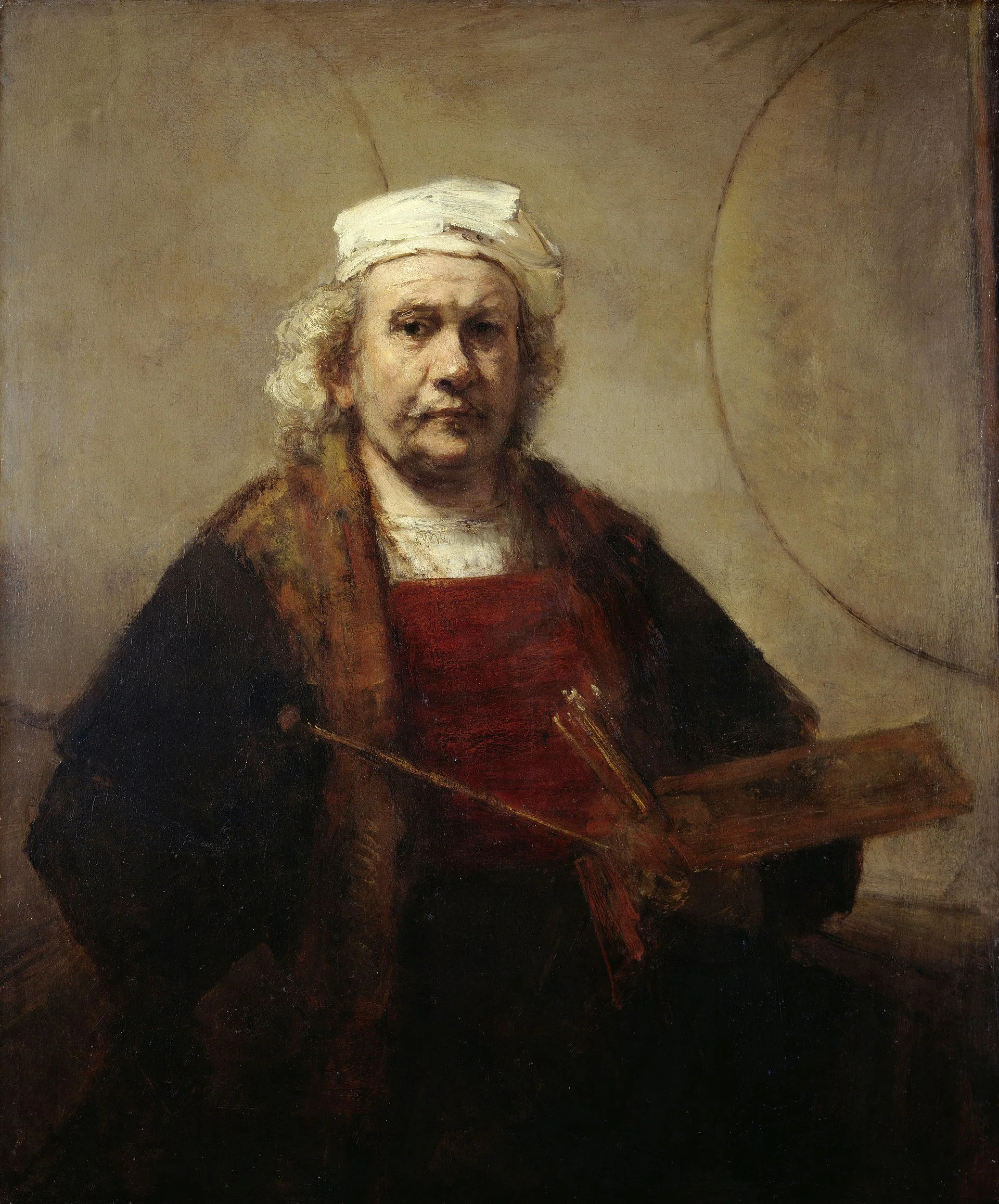
Rembrandt, Self Portrait, 1669
In his profoundly helpful book How To Know A Person: The Art of Seeing Others Deeply and Being Deeply Seen, David Brooks remarks that “above almost any other need, human beings long to have another person look into their face with loving respect and acceptance.” I’ve come to believe, he continues, the “one foundational skill” we all need so desperately, is not only to be seen in this way, but “to see someone else deeply and make them feel seen.”
Do we always see deeply in this way? Or don’t we so often turn the focus back on ourselves, to compare, or compete, to lift up ourselves. Our phones have contributed to this self-absorption. Our truncated face to face contact contributes as well. What Brooks is proposing feels nothing short of transformational, both personally and culturally. I want to learn to buck the trends and look deeply into the face of another person with this “loving respect and acceptance.” I want to kick the habit of comparing back to myself.
I’ve been looking lately, for hours upon hours, at the extraordinary paintings of one of the greatest artists ever to live, the dazzlingly incomparable Rembrandt, that Dutchman who lived and worked in seventeenth century Amsterdam. The art historian Simon Schama has written a massive volume he calls simply Rembrandt’s Eyes. Thumb through these pages, and yes, those eyes are everywhere. Rembrandt is always looking. Deeply. Into himself for sure, but in his self-portraits, it is as if he is looking out from the painting at you and me. It is as if he sees into our eyes deeply too.
Look at the painting above with which I opened this post. Look at it for quite a long time. This was Rembrandt’s self-portrait, painted in the year of his death. For starters, I see in this painting a life that has been fully lived, don’t you think? There has been pain along the way, I suspect. There has been suffering and loss. There have been severe financial struggles. We know all of this from his biography, but we see it too in his face, in those eyes! We know he lost the wife he loved so deeply. We know he lost three infant children and his grown son Titus just before this painting. We see those things in this face, don’t we?
And yet, we see more than pain and sadness. Isn’t there a hint of joy in that face? He holds the tools of the painter in his hands. That’s a huge part of his story to the end. The painting speaks of contentment, deep satisfaction, quiet confidence. He has accomplished so much with those tools.
This is the same year, by the way, he painted The Return Of The Prodigal Son and Simeon In The Temple, two of the most deeply spiritual paintings ever painted. We see in those paintings, and this self-portrait, faces that shine with “radiance over the goodness of the Lord,” as Jeremiah had said. I see that radiance in his face.
As I look deeply into this self-portrait, I think I am hearing the voice of God saying, I will
comfort all who mourn . . .
give them garlands instead of ashes,
oil of gladness instead of mourners’ tears,
a garment of splendour for the heavy heart.
They will be called trees of righteousness,
planted by the LORD for his adornment. Isaiah 61:2-3 (REB)
Wouldn’t it be great to know, as we grow older, that we have been one of God’s trees for adornment? Wouldn’t it be great to know that God gives and receives comfort and gladness instead of mourning and a heavy heart? And that we can give those things too.
The Psalmist also captures what this great painting is all about:
LORD, my heart is not proud,
nor are my eyes haughty;
I do not busy myself with great affairs
or things too marvellous for me.
But I am calm and quiet
like a weaned child clinging to its mother. Psalms 131:1-2 (REB)
I want to be calm and quiet as I grow older. I want this kind of humility. I would love to have that radiant face. Give up the great affairs and the marvellous things, if there ever were such things. Stop the comparing. I hope I can be peaceful, humble, strong, confident, still looking, still seeing, still surprised by what I see, still searching for words, still able to put all of this in my last painting.